How We Use VO2Max Testing to Accurately Define Your Heart Rate Zones

How We Use VO2Max Testing to Accurately Define Your Heart Rate Zones
Most runners look at heart rate and see one thing:
A number.
But behind that number are very specific physiological systems that determine whether you fade late in a race… or finish strong.
Today I want to simplify something that often sounds overly technical: LT1, LT2, and VO₂max — and explain why understanding them (and training in the right zones) can completely change your results.
Let’s break it down in everyday terms.
Your Body Has Three Key “Gears”
LT1: Your All-Day Gear
This is the effort where your body is burning a high percentage of fat and keeping fatigue low. You can hold this pace for a long time without blowing up. This is usually keeping your heart rate right at or below Z2.
If you improve LT1:
You become more durable
Your easy pace gets faster without feeling harder
Long runs feel smoother
You stop fading late in races
For ultras and trail races, this is your most important system.
LT2: Your Sustainable Speed
This is your strongest steady effort. Think threshold or 1 hour pace. This is usually Z4 for heart rate zones.
Below LT2, you’re stable.
Above LT2, fatigue accelerates quickly.
If you improve LT2:
Your 10K and half marathon pace improves
Hills feel more manageable
You can push harder without falling apart
For 10K to marathon distances, this becomes a major performance driver.
VO₂max: Your Aerobic Ceiling
This is your engine size. It represents the maximum amount of oxygen your body can use during intense exercise.
If VO₂max increases:
Every pace below it feels easier
Your speed potential improves
Your recovery between hard efforts improves
It’s not the only thing that matters but it sets the ceiling for everything else.
Why Training in the Correct Zones Is the Game-Changer:
Here’s where most athletes go wrong.
They train too hard on easy days and not precisely enough on hard days.
If your “easy” runs drift above LT1:
You burn more carbohydrate than necessary
Fatigue accumulates
Recovery suffers
Long-term progress stalls
If your workouts miss LT2:
You’re not fully stimulating threshold adaptation
You’re working hard… but not optimally
If VO₂max intervals aren’t truly high enough:
You never challenge the ceiling
Speed improvements plateau
When your zones are accurate:
Easy days build your aerobic base
Threshold days raise sustainable speed
High-intensity days lift your ceiling
Long runs improve durability instead of just tiring you out
The right intensity at the right time produces the right adaptation.
Why Guessing Isn’t Ideal?
Two runners can have the same max heart rate… but completely different thresholds.
That means one athlete might be overtraining.
Another might be undertraining.
Without testing, you’re estimating.
With testing, you’re precise.
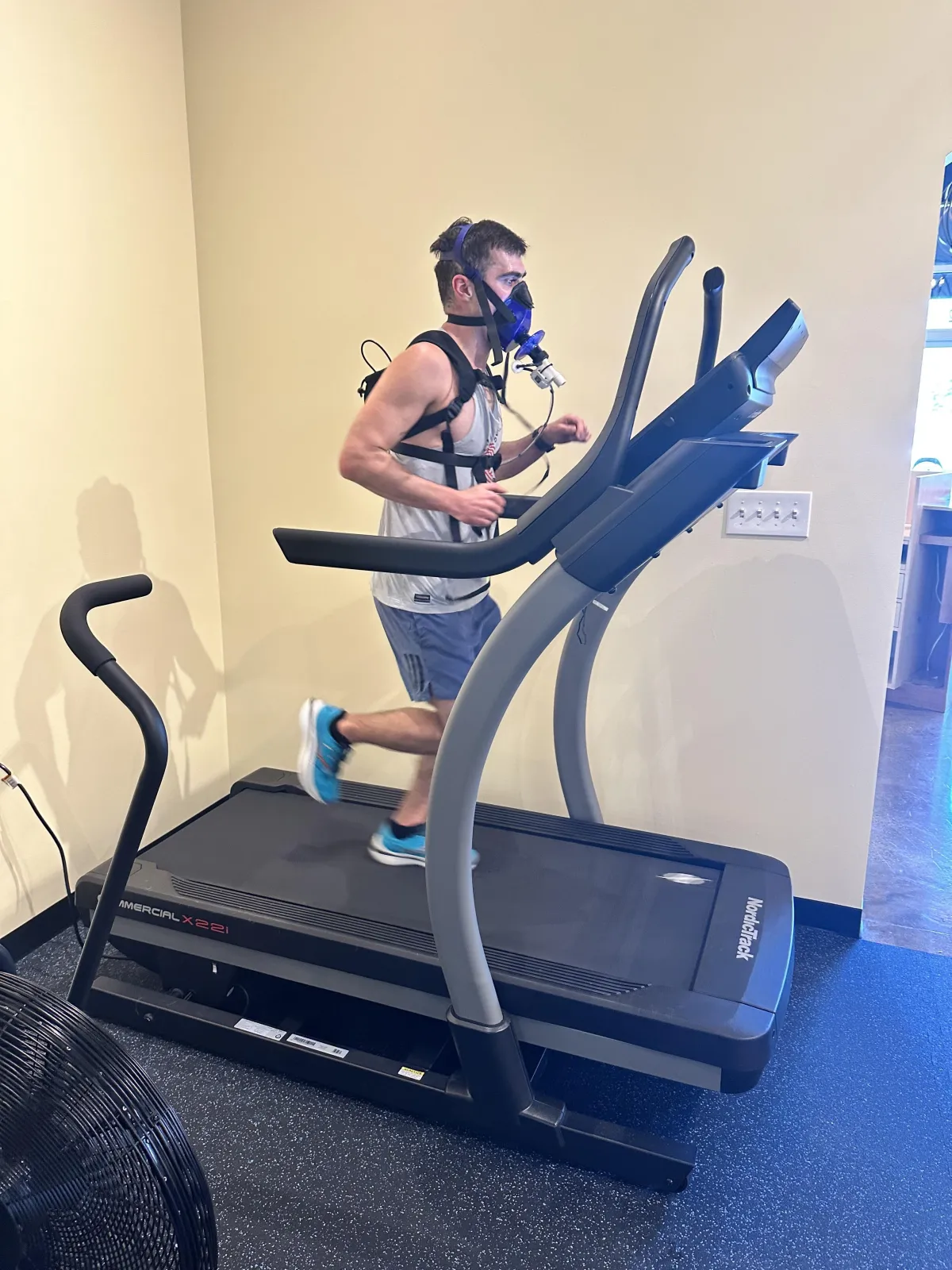
How We Use VO2Max Testing to Define Your Specific Zones
A proper metabolic test tells you:
Exactly where you burn the most fat
Exactly where your aerobic threshold (LT1) is
Exactly where your sustainable threshold (LT2) is
Your true VO₂max
Your personalized heart rate zones
That means:
Easy days stay truly easy
Hard days hit the correct intensity
Long runs build durability
Race pacing becomes strategic instead of hopeful
The Bottom Line
Training harder isn’t the answer.
Training smarter is.
When you know your physiology and train in the right zones, progress becomes intentional instead of accidental.
If you want to see exactly how your engine works — and how to improve it — reply to this email and we’ll talk about whether a VO₂max test is right for you.
Happy running,
R2S team
Book FREE 15- Minute Phone Consultation
Also, If you are dealing with an injury and need help or would like to optimize your performance and recovery with some professional help, book a phone consultation below!
We also provide:
Dr. Dylan Glass, PT, DPT, SMTC
Dr. Josh Cornett PT, DPT, COMT, CDNT
Return 2 Sport PT
256-513-9525



Copyright (C) 2025 Return 2 Sport PT & Performance. All
rights reserved.